FMCG
Published 28 August 2025 · Updated 15 November 2026
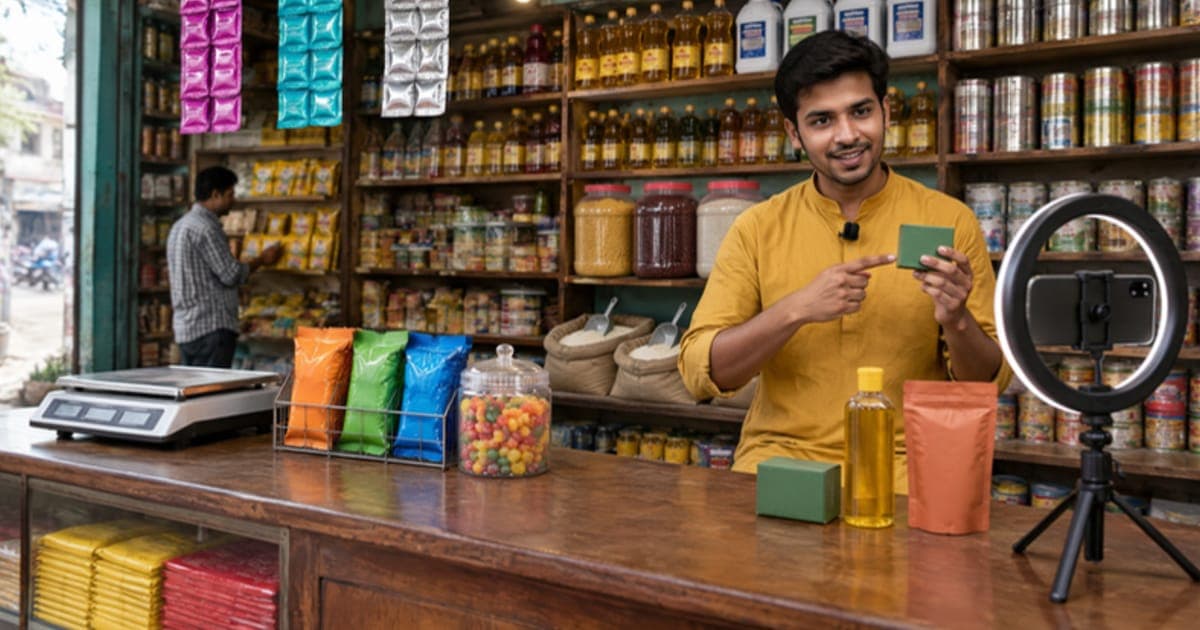
For most of India's FMCG history, the playbook for reaching consumers has been built around physical distribution , getting products onto shelves in lakhs of kirana stores, general stores, and increasingly modern retail, across thousands of towns and villages. This network took decades to build and remains one of the most defensible assets large FMCG companies have. Now, as influencer marketing becomes core infrastructure rather than a side channel, FMCG companies are discovering that the same systematic, market-by-market thinking that built their distribution networks is exactly what's needed to build effective creator networks.
Think about how a traditional FMCG distribution network is structured: a national company doesn't sign one mega-distributor for all of India. It builds a hierarchy , national, regional, and local distributors, each responsible for a defined geography, each with relationships and credibility within their area, collectively providing coverage that no single entity could achieve alone.
Creator networks need the same structure. A handful of large national influencers , the equivalent of a single mega-distributor , cannot provide the granular, localized reach that hundreds of regional and local creators can. Just as a kirana store owner in a small town has relationships and trust that a national retail chain doesn't, a local creator has community relationships that a national influencer simply cannot replicate.
FMCG marketers sometimes try to replicate distribution-style coverage with a single large influencer campaign , sign one or a few big names, run a national push, and assume the reach covers the country. But reach isn't coverage. A campaign featuring a Mumbai-based celebrity might technically "reach" someone in a small town in Bihar through a video view, but it doesn't create the localized trust and relevance that drives a purchase decision the way a local kirana store recommendation or a known local creator's endorsement does.
Distribution networks work because they're granular , a product needs to be physically present and recommended at the local level to sell. Creator networks need the same granularity to be genuinely effective, especially since many consumers say they trust smaller creators' recommendations over celebrity endorsements, and this trust gap tends to be most pronounced in smaller markets.
Just as FMCG companies expand distribution market by market , establishing presence in a region, building local relationships, then expanding to the next , creator networks should be built the same way:
1. Map markets by priority, not alphabetically. Identify which cities, towns, and language regions matter most using Reelax's influencer directory by city, based on existing distribution strength, growth potential, or new product launch geography. Rural and small-town markets, which account for a large share of FMCG consumption, should weigh heavily in this mapping.
2. Identify "anchor creators" per market. In each priority market, identify a small number of creators who have genuine local standing , the equivalent of a strong regional distributor. These become the foundation creators a brand builds an ongoing relationship with.
3. Build outward from anchors to a broader local network. Around each anchor creator, identify a wider set of smaller, niche creators , covering different categories, neighborhoods, or sub-audiences within the same market , the equivalent of the retail outlets a distributor services.
4. Maintain the network, don't just activate it for campaigns. Distribution networks require ongoing relationship management , regular contact, incentive structures, performance tracking. Creator networks need the same. A creator who only hears from a brand during campaign bursts won't develop the kind of ongoing advocacy that a continuously engaged creator will.
Different FMCG categories benefit from different creator network structures , and they also come with different engagement baselines, so benchmark each creator against their niche with an engagement rate calculator:
A common objection to this approach is scale: building and maintaining relationships with hundreds or thousands of creators across regions sounds operationally daunting compared to managing a handful of large influencer contracts - this is exactly the gap campaign management software is built to close. But this is precisely the challenge FMCG companies solved decades ago for physical distribution , the answer was systems, not avoidance. Distribution management systems track lakhs of outlets; creator relationship management needs the equivalent infrastructure.
Databases that catalog creators by city, language, and category at scale , Reelax's influencer search, for example, covers 1M+ creators across 4,000+ cities, 780+ categories, and 12 languages , exist to solve exactly this discovery and management problem, similar to how distribution management software helps FMCG companies track and manage their retail networks.
The data for building a creator network market by market is now far more granular than it was a year ago. Reelax's Uttar Pradesh Creator Landscape Report 2027 lists 110,888 influencers based in UP alone, spread across 107 cities and towns , with the largest pools in Lucknow, Noida, Kanpur, Ghaziabad, Varanasi, Agra and Meerut. For an FMCG brand, that is effectively a creator "distributor map" for one of India's biggest consumer states, and a model for how to plan the next region.
Category benchmarks have sharpened too. In Reelax's October 2026 data on 3,791 Instagram creators, food and drink creators had a median engagement rate of 4.72% and health and fitness creators 3.78%, while beauty creators sat at 1.99% and home decor creators at 1.59%. A food brand and a home care brand should therefore set very different expectations for their anchor creators.
And the economics of the regional network now have a number attached: Reelax's Creator Economy Report H1 2026 found regional micro creators out-engage metro macro creators by 2-3x at about a tenth of the cost per post, across 40,000+ brand-creator collaborations.
FMCG companies that built strong distribution networks decades ago still benefit from that advantage today , it's a moat that's expensive and slow for competitors to replicate. The same will likely be true of creator networks. A brand that has spent years building genuine relationships with hundreds of regional creators across India's languages and cities has built a marketing asset that a competitor can't simply replicate by writing a bigger check for one campaign. For FMCG marketers, the lesson from distribution is clear: systematic, granular, market-by-market network-building beats big, centralized bets , and it always has.
Search Reelax's verified database of 1M+ Indian creators across 4,000+ cities and 12 languages, and shortlist the right voices for your next campaign.
Continue exploring with the Reelax blog archive, see real results in our case studies, or plan a campaign with our free marketing tools.
Reelax is an AI-powered influencer marketing platform for Indian brands. It reads every creator's growth, engagement and audience signals so you shortlist the right people in minutes, not weeks.
Tamil food creators in Chennai, 50K-500K
Discover 1M+ verified creators across 4,000+ cities, 780+ categories, and 12 languages - with fake-follower checks, cost calculators, and deep data metrics to find the ideal match for every campaign.