FMCG
Published 12 March 2025 · Updated 15 November 2026
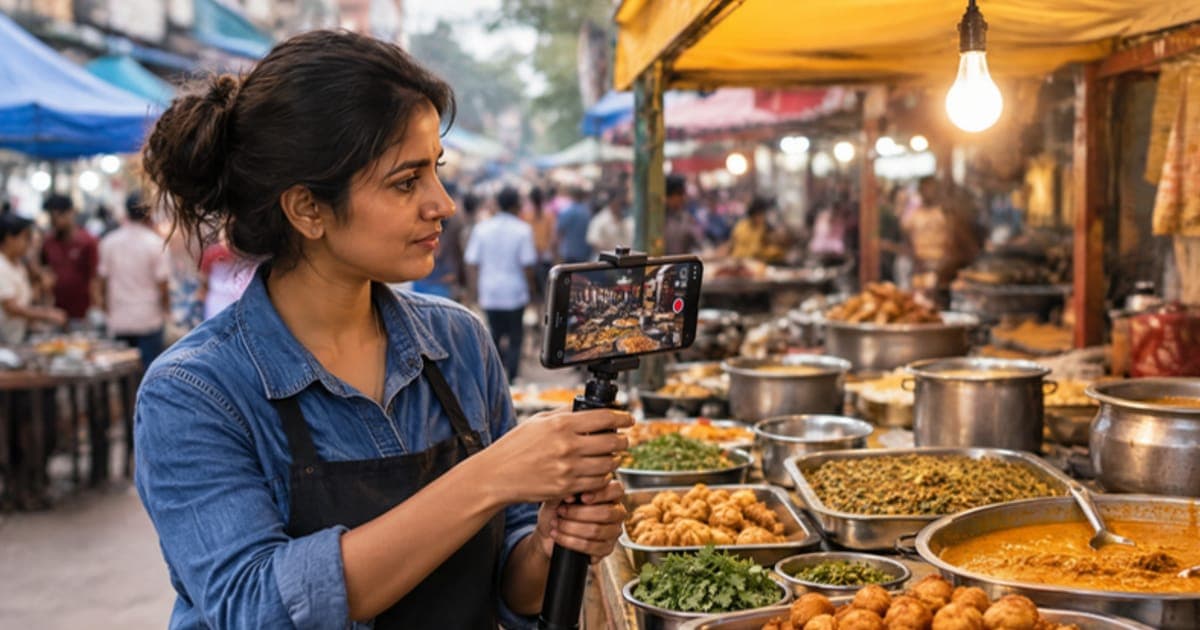
India's food culture isn't really one culture , it's hundreds of overlapping regional, religious, and even neighbourhood-level food cultures, each with its own staples, festivals, and ways of cooking the "same" dish. A national food influencer making content about "Indian breakfast" might show poha, dosa, or paratha depending on where they're from , but a hyperlocal creator in a specific city knows that in their neighbourhood, breakfast also means a particular bakery's bun-maska, or a specific tea stall's cutting chai, or the way a local sweet shop makes a regional variant of a dish that doesn't exist anywhere else.
This specificity is exactly what makes hyperlocal food creators so effective for food and beverage brands , and why many are now outperforming bigger, more polished food influencer accounts.
Food is a category where trust matters intensely , people are putting things in their bodies, often feeding products to their families, and are understandably cautious about new brands. A national food influencer with millions of followers, doing a sponsored review, reads as exactly what it is. A hyperlocal creator , someone whose content the audience has followed because it reflects their own city's food reality , recommending a product feels like a tip from someone in the same boat.
This connects to the commonly cited survey finding that roughly 82% of Indian consumers trust nano creator recommendations over celebrity endorsements, and food is likely one of the categories where this gap is most pronounced, because the "does this actually taste good and is it actually healthy" question is one people genuinely want an honest answer to.
Audiences reward food content with attention, too. In Reelax's October 2026 benchmarks of 3,791 Instagram creators, Food & Drink creators had a median engagement rate of 4.72%, one of the highest of any category and well above Beauty (1.99%) or Technology (2.41%) (engagement benchmarks).
A snack brand launching a new namkeen flavour might find that what works in Gujarat (often sweeter, milder spice profiles) doesn't land the same way in Andhra Pradesh (where spice tolerance and flavour expectations are completely different). A national campaign with one creator and one message can't capture this , but a network of hyperlocal creators across regions naturally surfaces these differences, often before a brand even realizes there's a regional taste gap to address.
Some brands have used hyperlocal creator feedback essentially as informal market research , when creators across different cities give genuinely different reactions to the same product, that's a signal worth paying attention to for regional product variants or marketing angles.
Local recipe integration: A creator in Lucknow showing how a new sauce or spice mix fits into a dish that's specifically associated with that city's cuisine creates a connection a generic "here's a recipe using this product" video from a national creator can't match.
Festival and seasonal content: Food and festivals are deeply linked in India , and the specific foods associated with festivals vary enormously by region. A sweets brand wanting visibility during Onam needs Kerala-based creators making payasam and other Onam sadhya items, while the same brand during Pongal needs Tamil Nadu creators focused on sakkarai pongal , these aren't interchangeable, and a single national creator covering both authentically is rare.
Local market and shop-based content: Food creators who film at local markets, mandis, or specific neighbourhood shops build a sense of place that resonates strongly with audiences from that area , and for brands available at general/kirana stores rather than just online, this kind of content can directly drive foot traffic to where the product is stocked.
Street food and quick-service formats: For beverage brands especially (think flavoured milk, health drinks, ready-to-drink tea/coffee), creators who integrate the product into everyday "chai break" or street-food-adjacent content tend to feel more native than studio-shot beverage ads.
Rather than searching for "the best food influencers in India," a more productive approach for food and beverage brands is using an influencer search tool to build a roster of hyperlocal creators city by city , even neighbourhood by neighbourhood in large metros , who genuinely create content about food in that specific place. For a pan-India launch, this might mean working with creators in 15-20 cities simultaneously, each producing content that feels native to their location, rather than one creator's content being pushed everywhere.
This is operationally heavier than a single national campaign, but it mirrors how food brands already think about distribution , a product that's "available everywhere" still needs local market understanding to actually sell in each place.
One useful filter when evaluating hyperlocal food creators: does their existing content already feature genuinely local food culture, or is it generic "foodie" content that could be from anywhere? A creator whose feed is full of recognizable local dishes, local restaurant names, and references their audience would know is a much stronger fit than one whose content is aesthetically nice but placeless , running a fake follower checker adds another layer of confidence.
For food and beverage, in-store availability matters as much as the content itself , a brilliant piece of hyperlocal content promoting a snack that isn't actually stocked in that creator's city will frustrate the audience and waste the goodwill built. Coordinating creator activations with actual distribution coverage , checking that the product is available in the relevant city/region before activating creators there , is a basic but often-skipped step.
Beyond that, tracking should focus on the metrics that matter for FMCG: where possible, sampling/trial requests, store locator clicks, or , for D2C-available products , discount code redemptions specific to each creator's city, all of which campaign analytics dashboards can consolidate.
Two things stand out for food and beverage brands this year. First, the data on food creators has firmed up. Reelax's hospitality industry report, built from creator samples across 34 major cities, puts the median engagement rate for food bloggers at 4.24% (hotel and restaurant influencer marketing). That makes food one of the few categories where you can expect strong engagement without paying for a large follower count, as long as the creator's audience is genuinely local.
Second, distribution has moved closer to the creator. As quick commerce grows, a hyperlocal creator's recommendation can be acted on within minutes, which raises the stakes on matching activations to where your product is actually stocked. Our piece on hyperlocal creators and the quick commerce war covers how brands are lining the two up.
The practical upshot: build your city-by-city bench with a city-level creator directory, check each creator's engagement against the Food & Drink benchmark rather than a generic one, and only activate in cities where stock and delivery coverage are confirmed.
Food is one of the most regionally specific categories in India, and hyperlocal creators who genuinely understand their city's or neighbourhood's food culture bring a level of authenticity and trust that national food influencers, however polished, often can't replicate. Brands building a city-by-city bench of these creators , and coordinating activations with actual product availability , tend to see stronger trial and word-of-mouth than those running a single national food influencer campaign and hoping it resonates everywhere.
Search Reelax's verified database of 1M+ Indian creators across 4,000+ cities and 12 languages, and shortlist the right voices for your next campaign.
Continue exploring with the Reelax blog archive, see real results in our case studies, or plan a campaign with our free marketing tools.
Reelax is an AI-powered influencer marketing platform for Indian brands. It reads every creator's growth, engagement and audience signals so you shortlist the right people in minutes, not weeks.
Tamil food creators in Chennai, 50K-500K
Discover 1M+ verified creators across 4,000+ cities, 780+ categories, and 12 languages - with fake-follower checks, cost calculators, and deep data metrics to find the ideal match for every campaign.